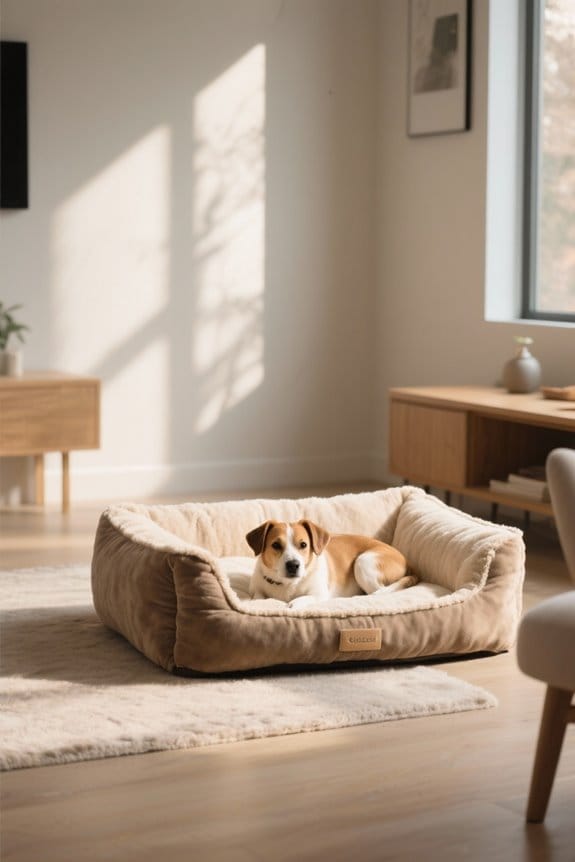
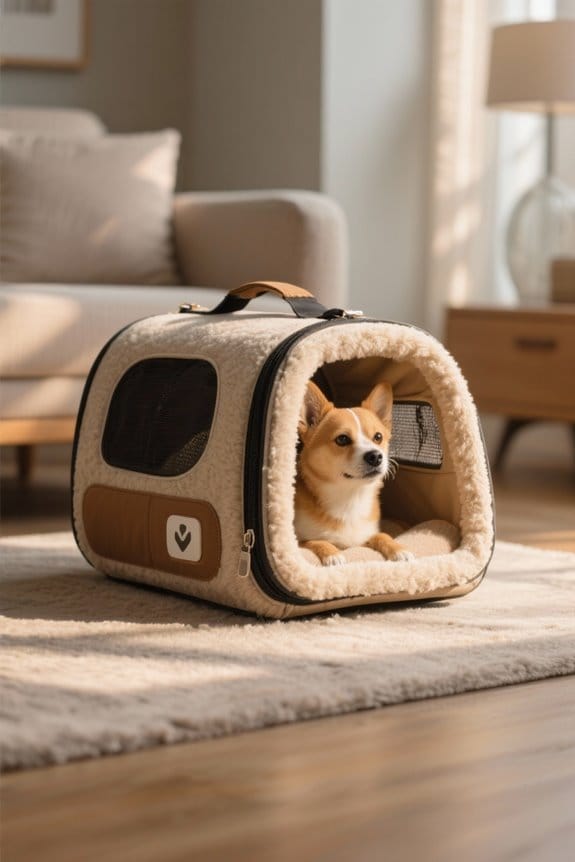
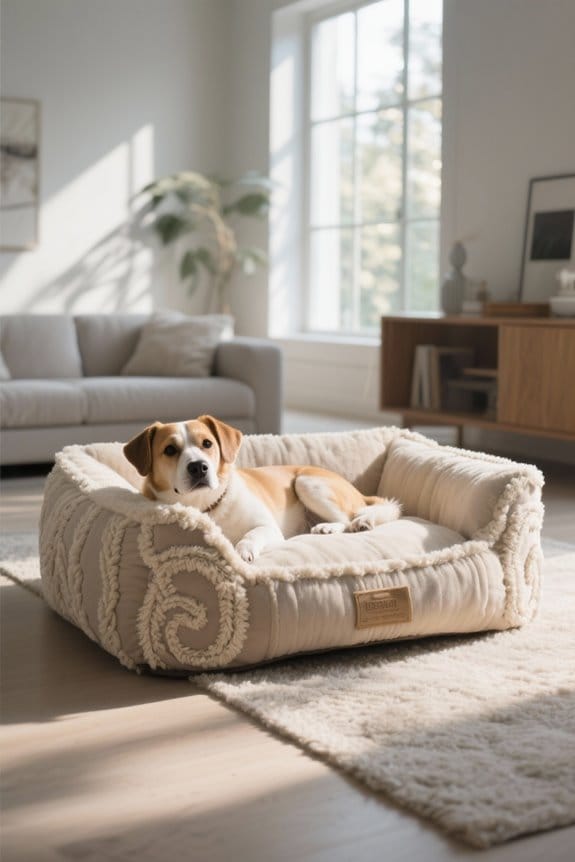
Adjusting a pet to a new bed requires a thoughtful approach. Start by removing the old bed, as it can create confusion. Utilize the scent method by placing familiar items, like an old blanket, to ease the dog’s comfort. Create positive associations with treats and playtime near the new bed. Establish a consistent routine and be patient, as some dogs take longer to acclimate. Each dog is unique, and exploring various strategies can guarantee a smooth adjustment.
Key Takeaways
- Remove the old bed completely and present the new bed in a distraction-free area to aid acclimation.
- Use familiar scents from old bedding or clothing to encourage exploration of the new bed.
- Create positive associations by using treats and praise when your dog engages with the new bed.
- Establish a consistent bedtime routine to help your dog feel secure and familiar with the new sleeping space.
- Monitor your dog’s comfort levels and be patient, allowing them to adjust at their own pace.
Let Go of the Old Bed (Or Hide It)
When moving to a new pet bed, one effective strategy is to let go of the old bed completely or at least hide it away. Removing the old bed can prevent confusion for your dog, as they do not understand the concept of a “new bed.” To encourage your dog to explore the new bed, it is vital to eliminate distractions. Key points include:
- Remove old bed: Confirm it’s completely out of sight.
- Create a distraction-free space: Present the new bed in an area without the old bed’s familiar scents.
- Acclimate more quickly: A clear shift will help your dog settle into the new bed more effectively.
Consider choosing a bed with non-toxic materials to ensure your pet’s health and safety. This simple change can greatly enhance your dog’s comfort and acceptance of their new sleeping space.
Use the Scent Method
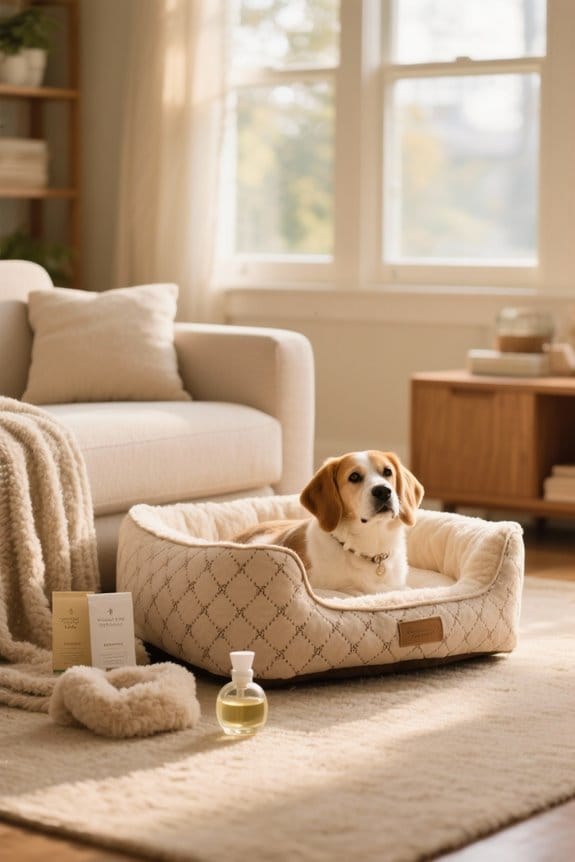
One effective method to help dogs adapt to a new bed is to utilize the scents they already know and trust. The scent method involves placing an item of your clothing inside the new bed. This familiar smell can bring comfort and safety, encouraging your dog to explore. High-quality materials such as faux fur and eco-friendly PP cotton enhance comfort and durability for your pet. Comfort through familiarity: Dogs often associate smells with positive experiences. Old bedding: A laid item from their old bed can enhance their sense of security. Positive reinforcement: Reward your dog for showing interest in the new bed. This strategy can reinforce the desired behavior.
Try the Swapping Method
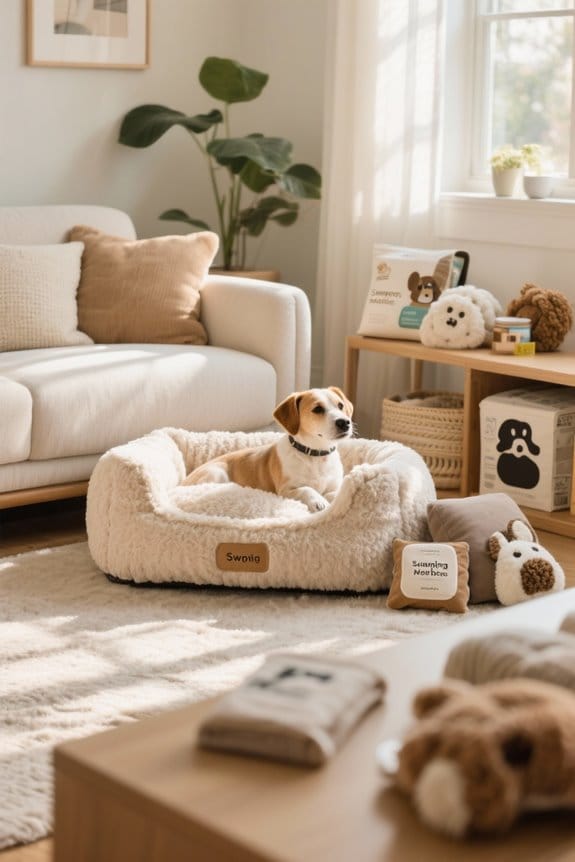
The swapping method offers a clever approach to help dogs adjust to a new bed by leveraging the comfort of familiar scents. It works by placing the old bed cover onto the new bed, allowing dogs to recognize comforting odors. This method is particularly effective when paired with eco-friendly dog beds, as these beds often feature machine-washable removable covers, simplifying the process of using the old cover and maintaining cleanliness.
- Benefits of the Swapping Method:
- Dogs often don’t realize they are using a new bed.
- This helps make the change smoother and less intimidating.
As dogs begin to feel more comfortable, the old cover can be gradually removed. Monitoring their comfort levels during this process is essential. If they show signs of discomfort, adjustments may be necessary. By capitalizing on their strong sense of smell, dog owners can successfully encourage their pets to embrace new sleeping arrangements.
Use the Association Method
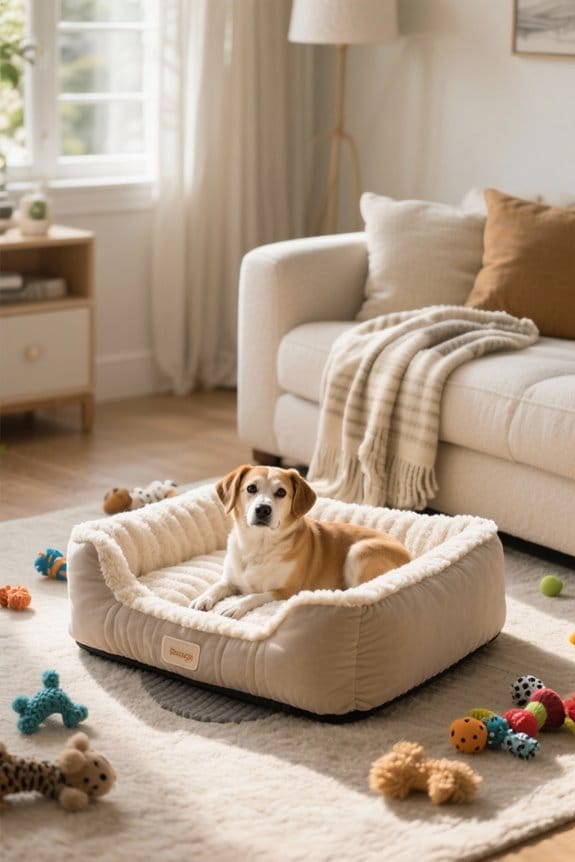
Creating a positive association with a new pet bed can greatly ease the change for dogs. This method encourages the dog to view the bed as a safe and enjoyable space.
- Engage in Playtime: Incorporate favorite toys to spark curiosity.
- Use Treats and Praise: Whenever your dog explores or interacts with the bed, immediately reward your dog to reinforce positive experiences.
- Consistent Commands: Use clear commands, like “bed” or “place,” to establish recognition of the new sleeping area.
- Create Comfort: Avoid negative experiences by never using the bed for punishment.
- Consider using beds with removable, washable covers to simplify maintenance, ensuring a fresh and inviting space for your pet.
These strategies help guarantee your dog feels secure and happy, making the change smoother. Over time, the new bed can become a beloved retreat for your pet.
Reasons Why Your Dog May Not Use Their New Bed

Changing to a new bed can sometimes be a perplexing process for dogs. Several reasons may contribute to their reluctance to use a new bed.
- Scent Influence: Dogs rely heavily on scent. An unfamiliar smell can make the new bed uninviting, as they often feel more comfortable surrounded by familiar scents.
- Adjustment Period: Adapting takes time. Dogs may need patience to adjust before they feel secure and at home in their new space.
- Negative Associations: Past experiences with unfamiliar bedding can create an aversion.
- Environmental Changes: New homes or routines can increase stress and diminish comfort levels.
- Positive Reinforcement: Encouragement through treats or praise can help dogs adapt to their new bed more effectively.
- Comfort Level: It’s important to consider the support features of the new bed, as some beds offer orthopedic support that can make them more appealing to dogs who need joint relief.
Choosing the Right Bed for Your Dog’s Needs
Finding the right bed for a dog’s needs can make all the difference in their comfort and happiness. To select the perfect bed, consider several factors:
- Size: Confirm the bed accommodates your dog’s dimensions, allowing them to stand, lie down, and turn around comfortably.
- Orthopedic Support: For older or recovering dogs, an orthopedic dog bed can provide essential joint support, alleviating discomfort.
- Materials: Evaluate materials based on your dog’s preferences. Plush fabrics or memory foam can enhance dog comfort considerably.
- Security: Avoid beds that are too small or overly large; both can disrupt dogs’ sense of security.
- Durability: If your dog is a chewer, opt for chew-proof beds to protect your investment.
- Washability: Choose beds with machine-washable covers to simplify cleaning and maintenance.
Choosing wisely guarantees your dog’s cozy retreat.
Recommended Products

Waterproof Liner: The bed has a waterproof liner for easy cleaning and protection from spills or accidents.

Non-toxic: Our heavy duty dog kennels Made out of STEEL and having all parts welded which means our heavy duty dog cage can prevent even the most aggressive canines from escaping. Sturdy metal frame provides optimal ventilation and visibility which offer your dog a comfortable and reliable environment. It perfect for indoor and outdoor use.Safe and non-hazardous dog cages protect your pet's health, so you don't have to worry when it chews and licks.

Durable Ripstop Ballistic Cover: The heavy-duty cover will withstand scratching, digging, and occasional mouthing or chewing. Great for dogs that like to get a little rough with their beds! Please note that this is not a chew proof bed and it is not recommended for dogs that chew heavily or constantly on their bedding.
Make the Bed a Familiar, Inviting Space
To help a dog feel at home in a new bed, it is crucial to make the space inviting and familiar.
- Choose the Right Location: Place the new bed where your dog already feels comfortable. This encourages acceptance and exploration.
- Incorporate Familiar Items: Add a favorite blanket or toy to the bed. This creates a sense of security.
- Transfer Your Scent: Utilize an item of your clothing, like an old t-shirt, to transfer your scent. This helps your dog feel comfortable and secure.
Combining familiar smells with cozy items transforms the new bed into a personal haven. Encouraging your dog to explore this inviting space aids in easing the change. Making the bed welcoming truly enhances the experience.
Recommended Products

PREMIUM ‘Only the Best for my Pet’ – handmade (with love) soft and colorful shroud with thick woolen layers to keep your beloved pet wrapped up safe and snug

Removable and Washable Cover: The waterproof dog bed sofa has two layers of covers with high-quality U-shaped zippers, removable and machine-washable. Large dog bed covers are made of soft microsuede material. The fabric is designed to withstand rubbing, digging & nesting. The TPU 100% waterproof lining in the middle easily copes with accidents. This washable dog bed provides a cleaner environment for pets and protects the dog's health.

【RECLAIM YOUR BED, KEEP PETS CLOSE】Are you tired of sharing your bed with your furry friend? The bedside dog bed gives your pet a safe, cozy spot right next to you—without the hair, midnight kicks, or disrupted sleep. Designed for small/medium dogs (under 40 lbs, up to 26" long) and all cats, this dog bassinet lets you reclaim your personal sleep space while keeping your companion close.
Use Positive Reinforcement to Build a Connection
Establishing a connection between a dog and its new bed greatly benefits from positive reinforcement strategies. Rewarding a dog with treats or praise when they approach or lie on the new dog bed creates a positive association. This encourages the dog to feel more secure in their new space. Key strategies include:
- Using consistent commands, such as “bed” or “place,” reinforces desired behavior.
- Pairing rewards with commands makes it more likely the dog will willingly use the new bed.
- Regularly rewarding any interaction solidifies the dog’s connection to the new sleeping area.
Incorporating durable materials like rust-proof steel in the design of pet beds ensures longevity and provides a safe and stable environment, which further encourages pets to feel comfortable and secure.
These methods guarantee that the dog sees the bed as a preferred resting spot, enhancing their experience and encouraging loyalty to their new sleeping environment.
Recommended Products


【Natural Pine Wood Construction】The pet steps for large dogs is crafted from premium solid pine wood with an eco-friendly varnish finish that highlights the beautiful natural grain – adding a warm, elegant touch to your home decor. (Light varnish scent may dissipate quickly with ventilation upon opening)

【Measurement required before purchase】Please measure the height from your vehicle's trunk to the ground before purchasing. If you intend to use the ladder for a side door, please measure the opening width of the door (The side door opening must have a width greater than 16 inches and a vertical height between 28 and 33 inches for proper use.).
Establish a Comfortable and Consistent Routine
Creating a comfortable and consistent routine not only helps dogs feel secure but also encourages them to embrace their new sleeping area. Establishing a consistent bedtime ritual signals to your dog that it’s time to rest.
Key Steps:
- Engage in quiet activities before bedtime, such as gentle play or short walks.
- Guide your dog to their new bed during the routine to reinforce the habit.
- Use consistent commands and maintain the same timing for the routine.
A supportive bed helps reduce anxiety and restlessness, contributing to a more relaxed pet. These steps help reduce anxiety and promote comfort. A calm, predictable environment aids in easing your dog’s adjustment, helping them view their new bed as a safe and secure space. Consistency is key to successful changes.
Recommended Products

PROMOTES NATURAL INSTINCTS: (i) Loose blanket top provides comfort, security, and warmth for an anxious dog. (ii) Promotes your dog’s natural instincts of burrowing when anxious. (iii) Dogs instinctually bury treats or toys in blankets & beds to hide their prized possessions from other dogs or to simply save for later.

[A Stylish Addition to Your Home] - Beyond being an oasis for your pet, our calming dog bed adds a touch of elegance to your decor. The elegant dimensions of our round dog bed blend seamlessly with your home decor, enhancing your space while providing your dog a haven.

Calming Donut Dog Bed for Big Dogs with Anxiety - This calming donut dog bed lets large dogs curl up inside a high, plush bolster ring so they feel hugged, safe and relaxed. The raised rim supports the head and neck like a built-in pillow, helping soothe anxious or restless big dogs for deeper, more restful sleep. It’s a super soft dog bed that comforts clingy seniors and large breeds that like to lean in and feel secure.
Be Patient and Attentive to Your Dog’s Comfort
Shifting to a new pet bed can be an essential experience for a dog, and patience is vital throughout this process. Each dog adapts to changes at their own pace, so forcing them onto a new bed may cause unnecessary stress. To help your dog feel more comfortable, consider the following: Monitor their behavior and adjust the bed’s location if they show reluctance. Enhance comfort by adding soft cushions or favorite blankets. Keep the bed clean and well-maintained to guarantee your dog enjoys using it. High-quality materials can contribute to a more comfortable transition and ensure durability over time. Respecting your dog’s individual preferences and providing reassurance can greatly aid in acclimating your dog. Over time, these strategies will foster a sense of security and encourage them to embrace their new bed with confidence.
Recommended Products

Fully upholstered in the finest 100% Italian Nappa 11000 top grain leather for a premium and sophisticated look and feel.

【Modern Living Room Sofa 】High Back Support with headrests 5pc. deep seating sectional sofa set well built with headrest for higher back support, seating cushion with square pattern tufted design (no button) sofa set with reversible corner sofa can be set up as right configuration or left configuration options. Removable covers for the seating cushions, headrests, the back resting pillows and small accent pillows the covers can be remove for cleaning if needed (main 3pc. left arm sofa, corner sofa and right arm sofa have connectors pre installed) The sofa set is fully built only the sofa legs need to be installed after move in and set up

Fully Removable & Washable Covers for Easy Care: Designed to keep up with real life, all covers, including the armrests and base, are fully removable and machine washable. Whether you’ve got kids, pets, or just the occasional spill, this sofa is easy to keep fresh and clean
Frequently Asked Questions
How to Transition From Crate to Dog Bed?
To change from crate to dog bed, guarantee bed positioning in a familiar area, utilize scent familiarization with familiar items, and employ gradual introduction techniques, reinforcing crate comfort while encouraging use of the new bed.
How Long Does It Take for a Dog to Get Used to a New Bed?
Like a child adjusting to a new toy, a dog may take days to weeks to assess comfort in a new bed, with familiar scents playing a vital role in alleviating dog anxiety during this period.
How to Transition Dogs Out of Your Bed?
To shift dogs out of your bed, establish a bedtime routine with gradual separation. Introduce comfort items and apply positive reinforcement, rewarding them for using their new space to foster a sense of security and acceptance.
How to Transition Dog Food Change?
Experts recommend a gradual introduction of new dog food types over 7-10 days. A consistent feeding schedule helps monitor reactions, while adjusting portions guarantees minimal gastrointestinal upset during the shift process.