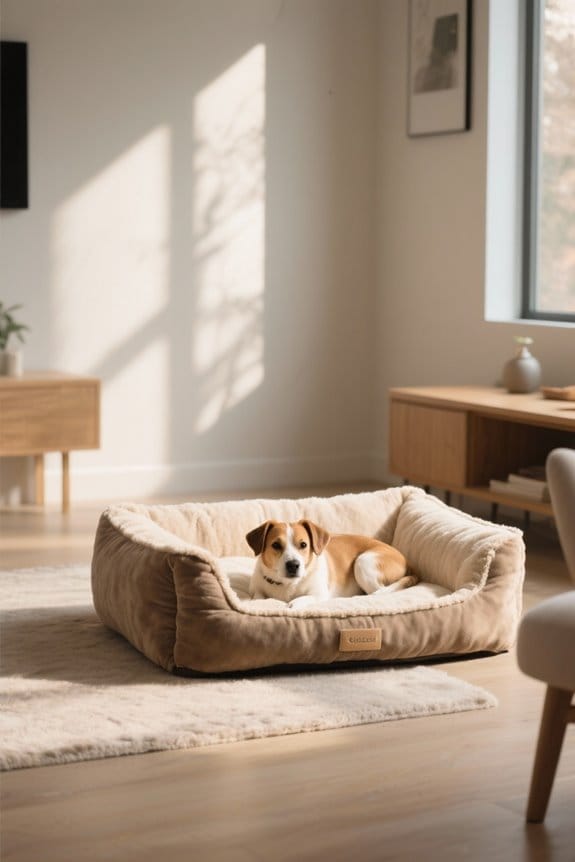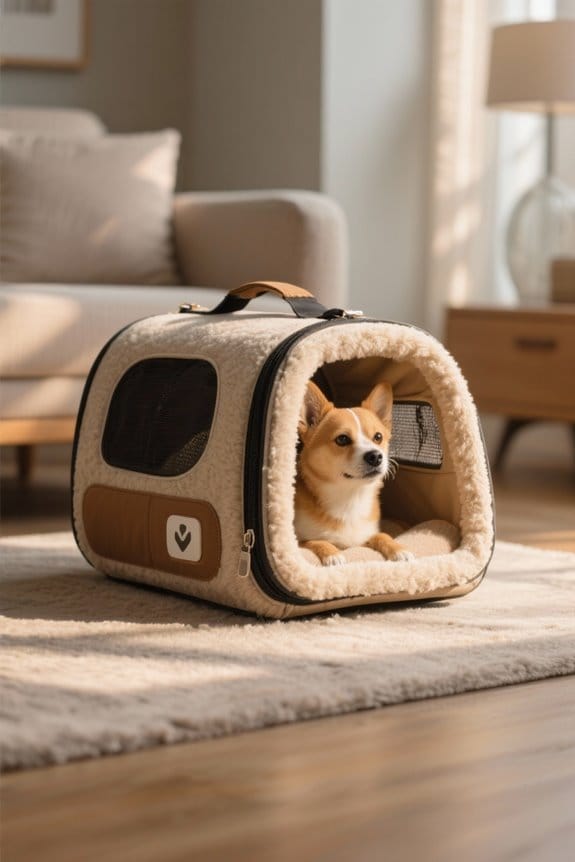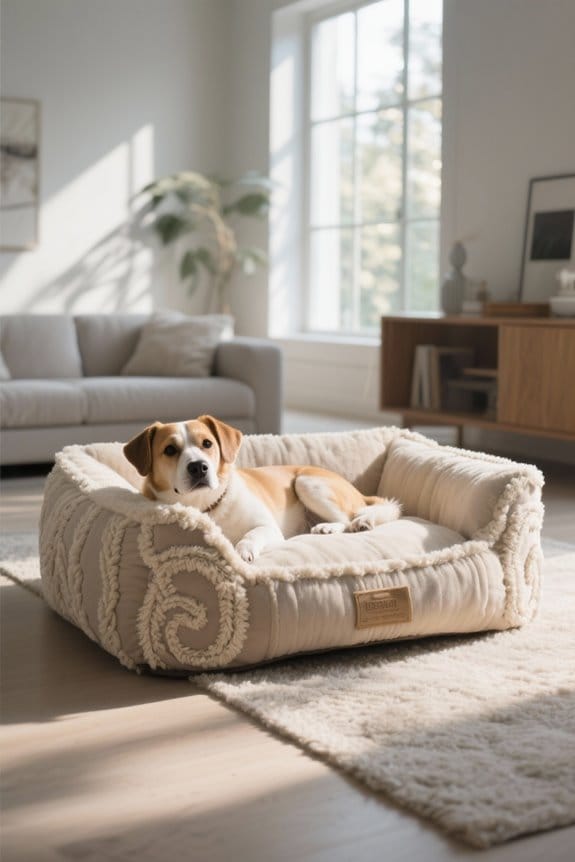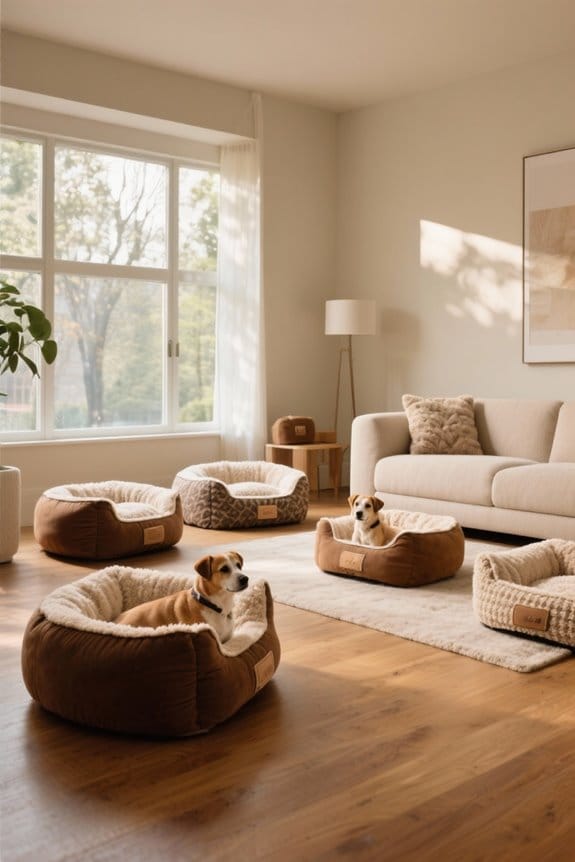

Managing territory issues with multiple pet beds requires thoughtful planning to guarantee comfort for each pet. Start by providing distinct beds, reflecting individual preferences, such as enclosed spots for cats and open areas for dogs. Position beds in quiet locations to reduce competition. Regular cleaning and maintaining a rotation system will keep beds fresh and minimize disputes. Observing interactions between pets will help identify and address territorial conflicts early. Following these guidelines can lead to a more harmonious household, and there are further strategies to explore.
Key Takeaways
- Provide distinct sleeping areas for each pet to reduce competition and territorial disputes.
- Use varied bed types and locations that cater to individual preferences and needs.
- Introduce multiple beds with different materials to promote personal space among pets.
- Monitor pet interactions and adjust bed placement as needed to enhance security and comfort.
- Establish a routine for cleaning beds regularly to maintain hygiene and prevent odor buildup.
Understanding the Importance of Territory in Multi-Pet Households
In multi-pet households, the concept of territory plays an essential role in the well-being of each animal. Proper management of territory influences the social dynamics between pets, affecting their interactions. Individual resting spots are vital; they lower competition for space and help reduce signs of territorial conflict. For example, pets may exhibit guarding behaviors over preferred beds, indicating stress or aggression. Key considerations include:
- Distinct sleeping areas for cats and dogs, as they have different territorial needs.
- Observing pets for signs of competition over resources.
- Ensuring each pet has a personal resting spot to enhance harmony.
Providing designated spaces can considerably improve coexistence, fostering a peaceful environment where each pet feels safe and secure.
Assessing Your Pets’ Individual Needs and Preferences

Evaluating the individual needs and preferences of pets is essential for their comfort and well-being. Pets have unique preferences regarding bed size, type, and location. To foster harmony and security, pet owners should closely assess:
- Bed Type: Cats often prefer enclosed spaces for warmth, while dogs enjoy open areas.
- Personal Space: Territorial behavior may arise from shared sleeping areas, so individual beds in separate zones are beneficial.
- Placement: Regularly adjusting bed locations based on observable preferences can enhance relaxation.
Providing multiple beds, including one for each pet and an extra, helps reduce competition. This thoughtful approach not only addresses territorial behavior but also guarantees that each pet feels secure in their chosen sleeping space. It’s also important to consider the design aesthetic appeal of the pet beds, as unique designs with soft pastels or bold prints can create a nostalgic vibe that complements home decor.
Designing Effective Sleeping Areas for Each Pet

How can pet owners create sleeping areas that accommodate the diverse needs of their furry companions? In a multi-pet household, designing effective sleeping areas is vital to reduce stress and avoid territorial disputes.
- Separate Spaces: Designate unique sleeping areas for each pet to guarantee they feel safe and secure.
- Varied Textures and Sizes: Use beds that cater to different preferences, like soft surfaces for older pets and firmer ones for active younger ones.
- Location Matters: Place beds in both quiet spots for solitary pets and more open areas for social animals.
- Visual Barriers: Incorporate furniture to help maintain personal space while still allowing pets to be close.
- Rotate Options: Change bedding and sleeping spots regularly to keep it interesting and discourage territorial claims.
- Consider Joint Support: When selecting beds, prioritize high-density foam options to provide orthopedic support, especially for senior pets or those with arthritis.
Recommended Products

FLEXIBLE MODULAR COUCH — This sectional couch boasts 6/7/8 generous seats, offering ample space for family and guests. You can freely create a U-shape, L-shape, or even a sofa bed to perfectly fit your living room space.

PLUSH MATTRESS: Rest easy. This California king mattress has all the essentials for a superior night of sleep at an affordable price

King Size Mattress - Combining multiple foam layers with reinforced pocket springs, the BedStory king mattress offers medium firmness for all sleeping positions
The Role of Bed Size and Style in Reducing Conflict

Creating harmonious sleeping arrangements in multi-pet households requires careful consideration of bed size and style.
- Variety Matters: Offering multiple beds in different sizes accommodates diverse preferences among dogs. This reduces competition for comfortable sleeping spaces.
- Larger Beds: A spacious bed allows multiple pets to lounge together, fostering positive social interactions and minimizing conflicts.
- Elevated Options: Beds like elevated platforms can provide retreat spaces, reducing anxiety and territorial disputes common with ground-level beds.
- Cozy Materials: Soft fabrics enhance comfort and encourage pets to claim their own designated areas, mitigating disputes over preferred spots.
- Rotation: Regularly introducing new designs keeps pets interested. Variety helps to minimize possessiveness, ultimately leading to a more peaceful multi-pet environment.
- Safety Features: Dog beds should have non-slip bases to prevent accidents and ensure stability, contributing to a harmonious environment.
Recommended Products

Customizable Elevated/ Raised Foam Dog Bed - Multiple Height and Color Options

MATERIALS: Our Dog Beds are made From Compact Laminate and Anodized Aluminum, a Dark Grey Waterproof and Washable Mattress is included

Ultimate Comfort Design: Premium orthopedic dog bed large sized for big dogs; Seven inch thick memory foam provides therapeutic support for joints; Microsuede cover feels soft against fur; Perfect for senior dogs or pets needing extra cushioning
Strategically Placing Pet Beds Around Your Home

Strategically placing pet beds around the home can greatly enhance the living environment for multiple pets.
- Establish Distinct Territories: Position pet beds in separate, accessible areas. This helps establish distinct territories for each animal, which can notably reduce territorial disputes.
- Consider Vertical Spaces: For pets like cats, utilizing elevated beds provides a safe retreat and can discourage conflict with larger pets, such as dogs.
- Comfortable Bedding: Confirm each pet bed features comfortable and familiar bedding, which promotes individual usage and gives pets their own personal space.
- Minimize Disruptions: Place beds away from high-traffic areas, allowing pets to rest undisturbed.
- Rotate Bedding: Regularly renewing bedding keeps pets interested and encourages equitable usage, reducing competition for preferred sleeping spots.
- Enhance Comfort: Incorporate non-slip bases in pet beds to maintain stability on smooth floors, ensuring pets feel secure while resting.
Recommended Products

【Cloud Oversized with Extra Deep Seating】Experience unparalleled comfort with MONACAR’s oversized modular sofa, designed with an impressive 42" deep seating. Its generous dimensions offer a plush sanctuary for lounging, reading, or napping, making every moment at home feel like a soft escape. Perfect for spacious living rooms, this cloud sofa invites you to sink in and unwind

Mid-Century Living Room Sofa: With its overall dimensions, paired with a studded design and a classic, timeless brown color palette, this HIFIT sofa has a mid-century modern style that is perfect for any space such as the living room, office, and lounge. Additionally, you can use it as a recliner or sleeper sofa for any tight space.

The latest electric lifting grooming table with a bunch of improvements from Flying Pig Grooming
Establishing a Cleaning Routine for Pet Beds
Maintaining a clean and healthy environment for pets involves establishing a diligent cleaning routine for pet beds. Here are key points to take into account:
- Schedule Regular Washes: Designate specific days each week for washing pet beds to reduce odors and guarantee consistent maintenance. Aim for at least once a week.
- Vacuuming Matters: Regularly vacuum pet beds before washing them to remove hair, dander, and debris. This practice helps reduce allergens in the home.
- Choose the Right Detergents: Use pet-safe detergents to avoid irritating skin and respiratory systems during cleaning.
- Utilize Removable Covers: Invest in pet beds with removable, machine-washable covers for easier cleaning and upkeep.
- Consider opting for beds with waterproof liners to protect the foam from accidents and prolong the bed’s lifespan.
Following manufacturer instructions helps maintain the beds’ longevity and cleanliness.
Encouraging Ownership of Beds Through Positive Reinforcement
Encouraging pets to embrace ownership of their beds is an essential aspect of promoting a peaceful and organized home environment. To achieve this, owners can utilize positive reinforcement techniques, such as:
- Rewarding pets with treats and praise when they use their designated bed.
- Establishing a routine that links their bed to feelings of comfort and safety.
- Gradually introducing new beds with familiar items, such as toys or blankets, to entice exploration.
- Consider providing a bed that offers orthopedic support features to ensure the pet’s comfort and health, which can help encourage regular use.
When a pet approaches another’s bed, owners should gently redirect them, reinforcing correct behavior with treats. This method not only reinforces ownership but also helps to diminish territorial disputes, ensuring harmony among pets. Ultimately, positive reinforcement cultivates a sense of ownership, benefiting both pets and their owners.
Observing Pet Interactions to Identify Issues
Recognizing how pets interact with one another can provide valuable insights into their comfort levels and potential conflicts. Observing pet interactions is essential for identifying territorial disputes over specific pet beds. Signs such as growling, hissing, or blocking access indicate underlying competition for resources.
Monitoring body language is equally important. Raised hackles or stiff postures can reveal discomfort or claims to territory. Additionally, each pet’s preferred sleeping spots can highlight social hierarchies and potential conflicts. Rotating bed locations regularly can help manage territory issues by providing each pet with their own space and reducing competition. To promote a healthier environment, regularly rotate bed locations and offer multiple pet beds. This practice not only provides each pet with their own space but also decreases competition, ensuring that everyone’s relaxation remains uninterrupted and everyone gets a chance to recline peacefully.
Managing Territorial Disputes When They Arise
Managing territorial disputes among pets can be a common challenge for pet owners, especially in multi-pet households. To minimize potential conflicts over pet beds, introducing multiple sleeping spots in different locations can help reduce competition. Each pet should have distinct beds, preferably with unique materials or designs, which aids in establishing territories and lessening resource guarding behaviors. To ensure comfort and compatibility, consider the size and weight capacity of each bed, accommodating the specific needs of each pet. To foster positive associations with their designated beds, owners can use treats and praise, reinforcing a sense of ownership. If disputes persist, monitoring interactions and repositioning beds to separate zones can enhance each pet’s sense of security. Gradual introductions of new beds will allow pets to explore without feeling threatened, further reducing the likelihood of territorial disputes.
Recommended Products

Homey Pet Dog Crate Bank: Includes: 4 Pack Three tiers stackable dog crate(Size: 42.5"L x 28"W x 84"H). Each unit measure 42.5"L x 28"W x 30"H (the interior height: 22.5 inches). Each unit comes with1 x Tray, 2 x Metal Floor Grids, 4 x Locakable Casters, 1 x Safe Locks, 2 x Steel Feeding Bowls (Food & Water). Perfect dog crate cage kennel for medium small dog breeds. Choose spacious dog kennels keep your dog's comfort and safety

Comfort and Elegance - The Belffin modular sofa features clean lines in a premium velvet fabric that gives the sleeper sectional couch a soft touch and lustrous appearance, which blends seamlessly with the resilient cushions for a comfortable experience

5-LAYER PROTECTION: These super absorbent pads include 5 layers. First, a non-woven quilted top layer that prevents splatters and tracking around the home. Next, a pulp and polymer sandwich, which instantly turns liquids into a gel, and lastly, a waterproof backing film on the bottom to make cleanup a breeze and protect your precious floors.
Providing Alternative Resting Spaces to Alleviate Tension
Providing alternative resting spaces can play an essential role in alleviating tension among pets in a household. By providing multiple beds in varied locations, pet owners can effectively reduce competition and establish individual territories. – Different Styles: Offering beds that cater to each pet’s preferences—like soft, enclosed spaces for cats or raised beds for dogs—encourages pets to choose their ideal resting spots. – Strategic Placement: Positioning beds in quiet areas allows pets to retreat and promotes calm behavior when feeling overwhelmed. – Elevated Options: For cats, incorporating shelves or cat trees provides safe havens away from dogs. – Engagement: Rotating bed locations can stimulate curiosity, offering environmental enrichment and decreasing territorial tension. Selecting a multi-cat bed that accommodates multiple pets comfortably can also help manage space and prevent overcrowding.
Recommended Products

Homey Pet Dog Crate Bank: Includes: 6 Pack two tiers taller 43 inch stackable dog crate(Size: 42.5"L x 28"W x 66"H). Each unit measure 42.5"L x 28"W x 34.5"H (the interior height: 28 inches). Each unit comes with 1 x Tray, 2 x Metal Floor Grids, 4 x Locakable Casters, Multi Locks, 2 x Steel Feeding Bowls (Food & Water). Perfect dog crate cage kennel for small to large dog breeds. Choose spacious dog kennels keep your dog's comfort and safety

Spark Playful Adventures With 10 years of expertise, The Juggernaut cat condo combines all of our most popular inventions and brings your cat’s playtime to a whole new level! It’s designed to encourage natural climbing, scratching, and lounging. Featuring a fun cat bridge to zip across, four comfy hammocks, floating scratchers, and planters for a fresh touch, this condo is perfect for both large and small cats. It’s the ultimate play space that will keep your cats happy and entertained!

Modular Sectional Sofa:Our minimalist style concubine chair sofa set is versatile, allowing for flexible configuration based on your needs. This living room ensemble comprises modular double longue chaise, enabling you to tailor your comfort and style
Long-Term Strategies for Harmonious Coexistence Among Pets
Creating a peaceful environment for multiple pets in a household requires thoughtful planning and consistent strategies. Long-term harmony can be achieved through the following methods:
- Provide multiple pet beds: Place them in various locations to allow each pet their own space. This reduces stress and territorial disputes.
- Tailor comfort levels: Choose beds that cater to each animal’s unique preferences, helping them feel secure in their chosen resting spots.
- Implement a rotation system: Regularly change the pet beds to keep them clean and engaging, encouraging exploration.
- Establish clear usage rules: Designate specific beds for each pet and reinforce these guidelines consistently.
Frequently Asked Questions
How to Fix Territorial Aggression in Dogs?
To fix territorial aggression in dogs, owners should emphasize canine socialization, establish boundaries, and implement training techniques. Identifying aggression triggers and encouraging dog bed sharing can help alleviate territorial behavior over time.
What Is a Red Flag Dog’s Behavior?
A dog exhibiting red flag behaviors may show aggressive barking, growling signals, and excessive guarding of resources. Jealousy displays and possessive tendencies towards toys or areas can indicate a deeper issue requiring urgent attention and intervention.
What Is the 3-3-3 Rule for Dog Anxiety?
Ironically, to ease dog anxiety, owners must embrace a lengthy change period. The 3-3-3 rule outlines three days of stress, three weeks for behavioral adaptation, and three months for calming techniques, guiding effective owner response.
Should You Have Multiple Dog Beds?
Having multiple dog beds is advisable, as various dog bed types cater to different sleep habits and enhance pet comfort. This approach mitigates territorial instincts, promotes bed hygiene, and accommodates shared spaces for all pets effectively.