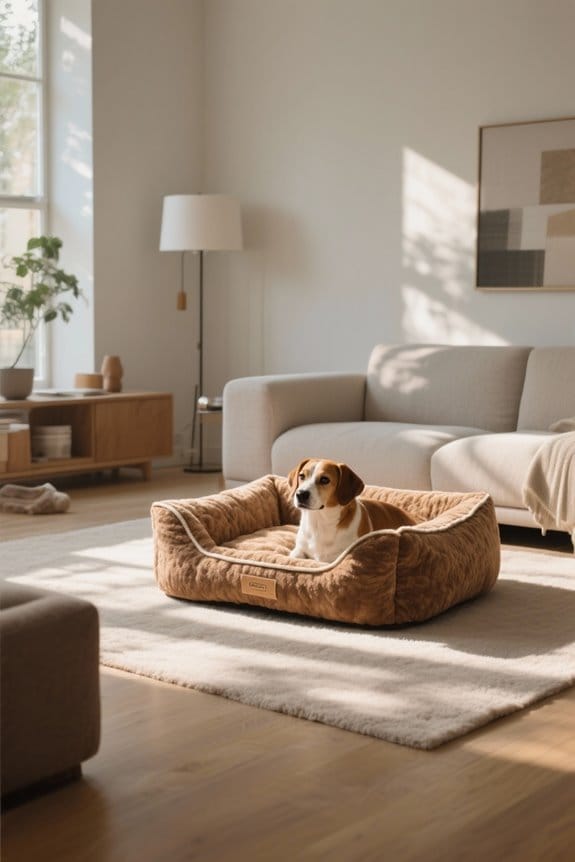

Choosing the right bed size for a dog is essential for their comfort and health. Small breeds generally need beds that are about 18 x 24 inches, while medium breeds require 24 x 36 inches. Large breeds need bigger options, ranging from 36 x 48 inches to 40 x 50 inches. Each size corresponds to the breed’s weight and sleeping style. Proper selection minimizes anxiety and enhances sleep quality. Continue on to discover how to find the perfect fit for your furry friend.
Key Takeaways
- Small dog breeds (up to 25 lbs) need beds around 18 x 24 inches for optimal comfort and support.
- Medium dog breeds (25 to 50 lbs) thrive in beds sized 24 x 36 inches, ensuring adequate space for sleep.
- Large breeds require beds between 36 x 48 inches to 40 x 50 inches, offering enough room for stretching and movement.
- Consider sleeping styles: curlers benefit from donut-shaped beds, while sprawlers may need larger, flat beds for comfort.
- Orthopedic and memory foam beds enhance joint support, especially crucial for larger and older dogs.
The Importance of Choosing the Right Bed Size
Selecting the right bed size for a dog is crucial for their overall well-being. Choosing the right bed size not only guarantees ideal comfort but also aligns with the breed characteristics and typical sleeping positions of dogs. Small breeds like Chihuahuas need beds around 18 x 24 inches, while large breeds such as Labrador Retrievers thrive in beds measuring approximately 36 x 48 inches. Key considerations include:
- Quality of sleep: A properly fitted bed enhances rest.
- Security for dogs: Correct sizes minimize anxiety.
- Oversized beds: These can lead to cold, unsupported feelings.
- Too-small beds: They restrict movement and cause discomfort.
Consider high-density foam in orthopedic dog beds, as it effectively relieves joint pain, enhancing overall relaxation for your dog. Ultimately, matching bed dimensions to breed needs considerably impacts their relaxation and overall health.
Size Guide for Small Dog Breeds

When it comes to ensuring a comfortable sleep for small dog breeds, size is not just a number—it’s a critical factor for rest and relaxation. Small dog beds, typically measuring around 18 x 24 inches, provide ideal comfort for breeds weighing up to 25 lbs, like Chihuahuas and Pomeranians. Dogs that curl up enjoy donut-shaped beds, offering a cozy retreat and secure environment. Softer materials are essential, as lighter dogs often prefer plush cushioning for deeper sleep. Consider future growth: when choosing bed size, a slightly larger bed measuring 20-22 inches can accommodate growing small breeds. It is crucial to select beds with non-slip bases to prevent accidents and ensure safety while your pet rests. Prioritizing the right bed size promotes restful nights for these little companions, ensuring they sleep soundly in comfort.
Recommended Products

Calming Donut Dog Bed for Big Dogs with Anxiety - This calming donut dog bed lets large dogs curl up inside a high, plush bolster ring so they feel hugged, safe and relaxed. The raised rim supports the head and neck like a built-in pillow, helping soothe anxious or restless big dogs for deeper, more restful sleep. It’s a super soft dog bed that comforts clingy seniors and large breeds that like to lean in and feel secure.

10 Best Akita Dog Beds for Ultimate Comfort and Style
As an affiliate, we earn on qualifying purchases.
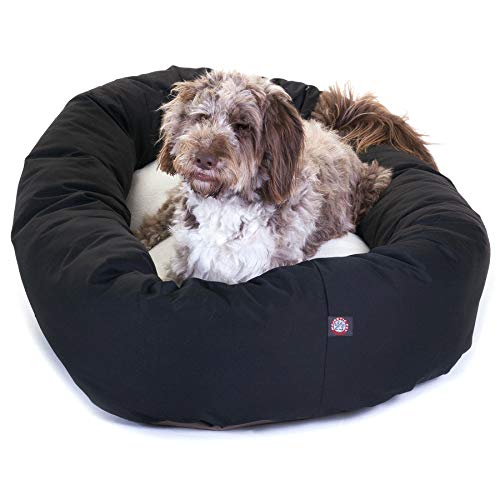
52-inch Black and Sherpa Bagel Pet Dog Bed

Calming Dog Bed: 23-inch donut cuddler provides a cozy haven designed to help soothe anxiety and stress in small dogs and cats up to 25 lbs; ideal for breeds such as French Bulldogs, Dachshunds, Yorkies, Terriers, Shih Tzus, Chihuahuas, and toy breeds
Size Guide for Medium Dog Breeds

Medium dog breeds occupy a unique space in the canine world, typically weighing between 25 to 50 pounds. For these breeds, choosing a bed size classified as medium is essential, with dimensions around 24 x 36 inches.
- Common examples include Beagles, Bulldogs, and Cocker Spaniels.
- When measuring your dog, consider a slightly larger bed if they enjoy stretching during sleep.
- A suitable bed for medium-sized dogs often includes orthopedic support features to help maintain joint health.
Make sure that the bed provides a supportive place to rest, especially for joints.

10 Best Arthritis Dog Beds for Comfort and Support in 2026
Features to look for in medium beds include:
- Material offering memory foam for joint support.
- Shape that accommodates sleeping styles, like cozy edges for curlers or flat mattresses for sprawlers.
A well-fitted bed enhances comfort and overall health.
Recommended Products

PREMIUM INDOOR DOG CRATE: Evolv is a slim, modular dog crate with a customizable design that seamlessly blends into any home decor, offering both a functional indoor dog crate and a stylish piece of dog crate furniture.

Durable - Featuring a luxurious non-shearing jacquard knitted berber fabric

Premium Orthopedic Support: One-piece CertiPUR-US memory foam provides therapeutic pressure relief for joints, hips, and spine. Ideal for senior dogs and IVDD-prone large breeds that need arthritis pain relief. The plush, fluffy bolster, filled with a blend of feather silk cotton and PP cotton, gently cushions the neck and head without sagging.
Size Guide for Large Dog Breeds

Choosing the right bed for large dog breeds is akin to picking the perfect throne for a canine king or queen. These breeds, such as Labrador Retrievers and German Shepherds, typically require bed sizes ranging from 36 x 48 inches to 40 x 50 inches for peak comfort.
When selecting a bed, consider these factors:
- Weight Capacity: Choose sturdy beds capable of supporting dogs from 50 to 100 lbs.
- Joint Support: Invest in orthopedic or memory foam beds to alleviate stress on joints.
- Sufficient Space: Make sure the bed allows the dog to stretch out comfortably for a restful sleeping position.
Recommended Products
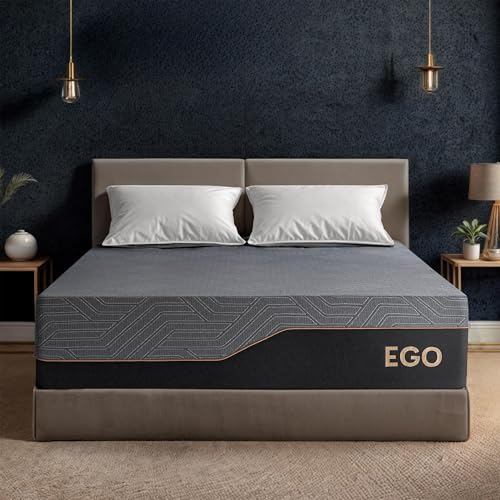
Medium firm Mattress for Every Sleep Style: Experience unparalleled comfort and support with our expertly crafted all-foam mattress, offering a medium firm feel. Our cooling gel-infused memory foam ensures a restful night's sleep, no matter your preferred sleep position.

MADE WITH: CertiPUR-US certified orthopedic memory foam for dogs of all sizes! Finally, a dog bed that you can trust and will last for years: the foam has gone through a rigorous process to ensure that it is made without heavy metals like mercury, toxic chemicals like formaldehyde and phthalates

Ultimate Comfort Design: Premium orthopedic dog bed large sized for big dogs; Seven inch thick memory foam provides therapeutic support for joints; Microsuede cover feels soft against fur; Perfect for senior dogs or pets needing extra cushioning
Size Guide for Extra-Large Dog Breeds

Selecting the appropriate bed for extra-large dog breeds is essential for guaranteeing their well-being and comfort. Dogs like Great Danes and Mastiffs typically need bed sizes measuring 48 x 72 inches. This size offers enough space for stretching out, aligning with their sleeping habits.
To enhance comfort and support, consider these critical aspects:
- Orthopedic Options: Ideal for joint and muscle support, especially for aging dogs.
- Durable Materials: Look for beds made from robust materials to withstand wear and tear.
- Strong Construction: Beds should maintain their shape under the weight of over 100 pounds.
For optimal support for senior dogs, orthopedic support features such as memory foam and egg crate foams are recommended to relieve joint strain.
Consulting a size guide can help guarantee that your extra-large breed enjoys a cozy resting place, contributing to their overall health and happiness.
Recommended Products

?Indoor and outdoor dog bed/dog hats/dog blankets for small dogs and cats.

Elegant Premium Finish Cover: Our premium finish fabric is made from our signature 1200 ripstop ballistic material and has all the same durability against punctures and tears from destructive dog behaviors. The premium finish is a coating applied to the surface of the ripstop fabric to give it a woven texture and a softer feel. Ideal for use indoors.

MEDICAL GRADE ORTHOPEDIC MEMORY FOAM DOG BED FOR JOINT RELIEF: This premium orthopedic dog bed is constructed with 4.5 lb medical-grade memory foam that contours precisely to your dog's body, distributing weight evenly to relieve pressure on joints, hips, elbows, and muscles. Ideal as a therapeutic dog bed for senior dogs, an arthritic dog bed for aging pets, and a firm orthopedic dog bed for large dogs recovering from injury or surgery. CertiPUR-US certified foam ensures every Bully Bed is completely safe, non-toxic, and built to the highest orthopedic standards available for dogs of every size and breed.
Factors Influencing Bed Size Selection
When considering bed size for dogs, it’s important to recognize the various factors that influence this decision. Selecting the right dog bed sizes involves understanding breed-specific requirements, which vary by size and weight.
Key Factors Include:
- Breed Size: Smaller breeds, like Chihuahuas, may need beds around 18 x 24 inches, while larger breeds, like Labradors, require beds of 36 x 48 inches.
- Sleeping Styles: Dogs that sprawl need more space, unlike curlers who prefer snug beds.
- Weight and Health: Heavier dogs need supportive beds to guarantee their comfort and health.
- Growth Needs: Puppies should have extra room for growth and movement.
Round dog beds, especially those with calming donut designs, are effective for alleviating anxiety and providing comfort across different dog breeds and sizes.
How to Measure Your Dog for the Perfect Bed Fit
Measuring a dog for the perfect bed fit is essential for guaranteeing both comfort and health. To begin, measure your dog from the tip of their nose to the base of their tail. This length will help you choose the right bed size.
Next, measure their height from the shoulder to the ground. This measurement assists in determining bed width. Use a flexible measuring tape to guarantee accurate dimensions are recorded.
Consult the manufacturer’s size chart using your dog’s measurements. This helps avoid a bed that is too small or excessively large. If your dog enjoys stretching out, consider adding 6 to 12 inches for extra space. With these steps, selecting the right bed will become a straightforward task. Additionally, it’s important to ensure the bed has CertiPUR-US certified materials to provide a safe sleeping environment for your furry friend.
Recommended Products

Vet-Trusted Safety Design for Everyday Grooming — Developed by a team with 20+ years in medical device engineering, Drybo Pro is designed to help address common concerns found in ordinary pet dryer boxes, including overheating, poor ventilation, and concentrated heat buildup. Trusted by veterinarians, groomers, and 200,000+ pet families worldwide for safer, more comfortable at-home drying.

Non-toxic: Our heavy duty dog kennels Made out of STEEL and having all parts welded which means our heavy duty dog cage can prevent even the most aggressive canines from escaping. Sturdy metal frame provides optimal ventilation and visibility which offer your dog a comfortable and reliable environment. It perfect for indoor and outdoor use.Safe and non-hazardous dog cages protect your pet's health, so you don't have to worry when it chews and licks.

Clinically proven benefits: In a University of Pennsylvania School of Veterinary Medicine study, large dogs showed reduced joint pain and improved mobility after sleeping on a Big Barke
Frequently Asked Questions
How to Choose the Right Dog Bed Size for Your Breed?
Choosing the right dog bed size involves understanding each dog’s essence—its breed, dimensions, and habits. Consider their comfort preferences, activity levels, age, and health needs to guide material choices and shape variations for ideal support.
How Do I Know if My Dog Needs a Bigger Bed?
To determine if a dog needs a bigger bed, observe their sleeping positions, behavior, and weight. Consider breed characteristics, age factors, activity level, and bed materials, ensuring proper support and comfort aligned with sizing guidelines.
Should a Dog Bed Be the Same Size as the Crate?
A dog bed should not match crate size; just as a tree needs room to grow, so must a dog. Space considerations and material choices affect comfort, enhancing sleep quality and positively influencing health and behavior.
Can a 6’4″ Person Fit on a Full Size Bed?
A 6’4″ person may struggle on a full size bed due to inadequate space efficiency and uncomfortable body alignment, impacting sleep quality. Mattress types vary, but alternative solutions include larger beds considering personal preferences and cost considerations.