When measuring your pet for a carrier, accuracy is key. First, measure their length by going from the nose to the tail root, then add 1-2 inches for extra space. For height, find the distance from the ground to the elbow joint and the top of the head—again, add a few inches for comfort. Finally, measure their width across the shoulders. Choosing the right size guarantees your pet travels comfortably, with more details available on essential tips for selection.
Key Takeaways
- Measure your pet’s length from nose to tail root and add 1-2 inches for clearance to ensure comfort.
- Measure height from the ground to the elbow joint and add 2-6 inches for adequate space in the carrier.
- Measure width across the shoulders and multiply by two for turning room; choose a larger carrier if measurements are between sizes.
- For brachycephalic breeds, ensure extra space for airflow to prevent breathing issues during travel.
- Use a tape measure on a flat surface for accurate measurements, ensuring your pet is standing naturally.
Importance of Correct Measurements for Pet Carriers
When it comes to selecting a pet carrier, size does matter—quite a bit, actually. Accurate measurements of your pet are essential to guarantee comfort and safety.
To properly measure your pet, consider the following carrier requirements:
- Length: From nose to tail root.
- Height from ground: To the elbow joint.
- Width: Across the shoulders.
- Overall height: From the floor to the top of the head or ear tip.
Incorrect measurements can result in choosing a travel carrier that’s too small or too large. For example, brachycephalic breeds may need a larger carrier due to their unique breathing needs. Proper carrier sizing allows pets to stand, turn around, and lie down, promoting overall pet health and well-being during travel. Additionally, well-ventilated carriers enhance comfort during travel by ensuring adequate airflow.
Key Measurements for Your Pet

Selecting the right measurements for a pet carrier is essential for both comfort and safety during travel. To guarantee proper fitting, four key measurements must be taken:
- Length (A): Measure from the nose to the tail root.
- Height (B): Measure from the ground to the elbow joint.
- Width (C): Measure across the shoulders.
- Height (D): Measure from the floor to the top of the head or ear tip.
For ideal carrier size, calculate:
- Length = A + ½B
- Width = C x 2
- Height = D + 3 inches
Brachycephalic breeds, like bulldogs, need a larger pet carrier for comfort. Accurate measurements allow space for the pet to stand, sit, and turn, guaranteeing a pleasant travel experience. It’s important to consider scratch-proof dog beds when planning for longer travels, as they provide durability and comfort, especially for pets prone to scratching or chewing.
Understanding Your Pet’s Length

A precise measurement of a pet’s length is essential for selecting the right carrier. To measure your dog, calculate from the tip of their nose to the base of their tail. This measurement, known as measurement A, must be taken while the pet is in a standing position for accuracy. To guarantee a proper fit, consider adding 1-2 inches to the length of the animal to account for clearance. This helps in finding a carrier that adheres to airline standards for pet travel. For squirmy pets, a helpful method is using a string and a ruler to capture the length, making the task more manageable. Accurate length measurements guarantee a comfortable journey for your furry friend. Additionally, selecting a carrier with non-slip bottoms can enhance safety and reduce the risk of accidents during travel.
Determining Your Pet’s Height

Determining a pet’s height is crucial in choosing the right carrier. To measure accurately, assess the height of the animal from the floor to the top of the head while they are comfortably standing in a natural standing position.
Steps for Accurate Measurement:
- Use a tape measure or a ruler for precision.
- Place your pet on a flat surface to guarantee an accurate measurement.
- For additional clearance, consider measuring to the highest point of the shoulder blades and adding 2 to 6 inches.
Recording these measurements is essential for carrier selection, guaranteeing the carrier provides enough space for your pet to stand comfortably during travel. A well-fitted carrier can make all the difference in comfort! Additionally, ensuring the carrier has breathable mesh panels and comfortable interior fabrics enhances your pet’s travel experience.
Measuring Your Pet’s Width

Measuring your pet’s width is crucial for selecting the perfect carrier. Begin by determining the width across your pet’s shoulders while they stand naturally.
Here’s how to measure effectively:
- Use a soft measuring tape or string. If using string, lay it flat against a ruler for accuracy.
- Focus on the widest point to guarantee ample room for comfort while moving.
- Add 1-2 inches for clearance beyond the measured width. This extra space caters to your pet’s natural movements.
If your pet’s width falls between sizes, choose the larger carrier. This guarantees a comfortable fit, preventing any unwanted squishing. A well-measured width assures your pet will enjoy their carrier, whether for a short trip or a long journey. Remember to verify specifications before purchasing to ensure the carrier meets weight limits and dimensions suitable for your pet.
Calculating Internal Volume for Comfort
Calculating internal volume plays a significant role in finding the right pet carrier, ensuring your furry friend has ample space to move comfortably. To achieve this, use the formula: Length x Width x Height.
- Length: Add half the height (measurement B) to the dog’s length (measurement A).
- Width: Multiply the shoulder width (measurement C) by two for adequate turning space.
- Height: Add 3 inches to the height of the dog’s head or ear tip (measurement D) for standing room.
Choosing a carrier with expandable designs offers relaxation space for pets, enhancing comfort during travel.
Special Considerations for Brachycephalic Breeds
When selecting a pet carrier for brachycephalic breeds—such as Bulldogs and Pugs—careful consideration is crucial. These dogs require special crate sizes, typically larger than standard dimensions. For maximum comfort, it’s recommended to increase the crate size by 10% to allow them to breathe comfortably, especially since they are more prone to respiratory issues. Ventilation holes must be strategically placed to guarantee adequate airflow. Larger carriers provide that essential additional airflow, which helps ease anxiety during travel. When choosing a carrier, ensure it has breathable mesh panels to enhance ventilation. When calculating crate dimensions, keep the following in mind:
- Length: A + ½B
- Width: C x 2
- Height: D + 3 inches
These adjustments help assure a snug yet spacious environment, reducing stress for your furry friend.
Recommended Products

Double the Space & Comfort — Expandable zip-open front design nearly doubles the interior space compared to standard carriers, giving pets extra room to stretch and relax. Spacious 24″L × (16″–30″)W × 16″H. Ideal for 2–4 small cats, 2 large cats or small dogs, puppies, rabbits, or 1 medium dog up to 55 lbs.

【Premium Vegan Leather – Stylish & Durable】 Crafted from high-quality vegan leather for a sleek look and long-lasting performance. Soft to the touch, stylish, and built to withstand daily use or travel.
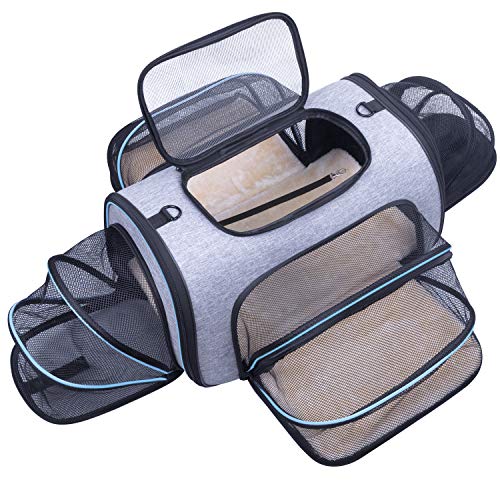
UNIQUE 4 SIDES EXPANDABLE PET CARRIER - Siivton airline approved pet carrier with 4-sided expandable mesh windows (not like other carriers with 2 sides expansion only). It can provide pets with large moving space, better vision, comfort, safety and reduce confinement anxiety when traveling by plane or car or for routine trips to the vet.
Assessing Carrier Construction Standards
Selecting the right pet carrier involves more than just size considerations; the construction standards of the carrier play an equally significant role in ensuring the safety and comfort of pets. IATA-approved carriers must be built from rigid materials, such as plastic, wood, or metal. Key features include solid leak-proof flooring to contain spills and odors, ventilation on four sides ensuring fresh air circulates effectively, smooth interior surfaces preventing injuries to pets during travel, and doors that securely latch to eliminate accidental openings. Two secured dishes for food and water allow hydration and snacks during delays. Additionally, airline compatibility standards are crucial for ensuring that the pet carrier meets specific airline regulations, which helps avoid disruptions during travel. These construction standards are essential for the overall well-being of pets, ensuring a safe journey wherever their travels may lead.
Recommended Products

Durable and Secure Design: Heavy-duty plastic and robust metal doors with grids ensure safety and durability during travel. Non-corrodible fastener nuts and bolts and interlocking wire steel doors provide an added layer of protection. The escape-proof design ensures your pet's safety throughout the journey.

FIRST-CLASS TRAVEL FOR PETS: The Ultra Vari Kennel meets most airline cargo requirements. With wire ventilation for fresh air and a raised interior, it provides a cozy, secure space for your pet. The tamper-proof holes enable zip ties to be attached to the door—a requirement for air travel.

Product 2: FOR PORTABLE KENNELS: The airline travel kit helps prepare you & your pet for safe & secure flights. In order to fit airline standards, the kit is equipped with metal hardware & zip ties to better accommodate pet requirements
Sourcing Airline-Approved Travel Carriers
Sourcing airline-approved travel carriers requires attention to detail, as compliance with International Air Transport Association (IATA) standards guarantees both safety and comfort.
Key factors include:
- Construction Materials: Look for carriers made from rigid materials, like plastic or metal.
- Safety Features: Verify a solid, leak-proof floor and roof, along with secure latching mechanisms.
- Carrier Dimensions: Select carriers that allow pets to stand, turn around, and lie down comfortably. Brachycephalic breeds may need extra space.
Airline-approved carriers(many stylish dog carriers are designed to meet airline regulations) eliminate stress during check-in and boarding processes, ensuring a smoother travel experience for both pets and owners.
Popular options like Petmate Sky Kennels are often top choices due to their certified compliance and durability.
Always check the carrier dimensions against your pet’s measurements and the airline’s guidelines to verify a perfect fit for air travel. Happy travels!
Recommended Products

FIRST-CLASS COMFORT FOR PETS: The Petmate Sky Kennel meets IATA requirements for live animal transport and meets most airline cargo specifications, providing secure air travel for pets; it includes 360-degree ventilation and tie-down strap holes

IATA AIRLINE COMPLIANT TRAVEL CRATE: Compliant with the standards specified in the 51st Edition of the IATA Live Animal Regulation for safe, secure air travel—The Kennel features a durable hard-sided exterior plastic shell, steady airflow and visibility built-in, accident moat pulls spills away from your pet’s body, airline-required tie-down holes for added security, reinforced metal hardware, and a strong secure door latch to keep dogs and cats safely contained during air travel.

Travel Bag by MOOR NYC a unique luxury made Pet Travel Bag design for dogs or cats
Finding the Right Carrier Size
Finding the right carrier size is a key step in guaranteeing that pets travel comfortably and safely. To begin, measure from the tip of the nose to the base of the tail, adding 1-2 inches for clearance. For height, measure from the ground to the top of the head and add 2-6 inches to ensure your pet can fully stand.
- Width should be measured across the shoulders and multiplied by two for turning room.
- Brachycephalic breeds must have a carrier one size larger for better airflow.
Lastly, verify the carrier dimensions against construction standards and airline specifications to guarantee compliance. The right size plays a critical role in ensuring your pet’s travel experience is stress-free and comfortable. When selecting a carrier, consider essential features such as mesh panels for ventilation and auto-locking zippers to enhance both safety and comfort.
Recommended Products

A solid plastic base with a cushioned floor and walls helps pets feel safe and relaxed during your rides - Extra plush dog bed accessory is also available (sold separately)

2-in-1 bike trailer and stroller with included 1-Wheel Stroller Kit and adjustable handlebar

Editors' Choice Award Winner of 2020 Dogster & Catster Magazines ★ 3-IN-1 TRAVEL SYSTEM ★ Versatile, luxurious pet stroller has a detachable carrier and also works as a car seat for maximum convenience. Easy fold/unfold operation lets you take it wherever you go. (Pet Carrier is not for AIRLINE IN-CABIN Travel)
Tips for Ensuring a Good Fit
When it comes to ensuring a proper fit for a pet carrier, accuracy in measurement is essential. Here are some tips to achieve that:
- Measure Length: From the tip of your pet’s nose to the base of its tail.
- Measure Height: From the elbow joint to the ground, along with the distance to the top of the head or ear tip for additional height.
- Measure Width: Across the shoulders.
To provide comfort, add 1-2 inches to the length and height measurements. For internal dimensions, follow these simple formulas:
- Length: A + ½B
- Width: C x 2
- Height: D + 3 inches
If your pet is a brachycephalic breed, consider a larger size to accommodate their respiratory needs.
Recommended Products

Soft-Sided Collapsible Dog Crate are not recommended for puppies or other dogs who might chew the fabric

Airline-Compliant & 3-Sides of Ventilation: Our soft-sided pet carrier has 3-sides of ventilation and complies with the in-cabin sizing of most major airlines. Roverlund pet carriers have flown on airlines including jetBlue, Delta, United, American, Southwest, Alaska, Spirit and Allegiant.

[STAIN RESISTANT & NON-SHEDDING]: Expertly machine-woven from enhanced synthetic durable fibers that are stain resistant and have a virtually non-shedding 0.45-inch thick pile.Construction type:Power Loomed
Preparing Your Pet for Travel
Preparing a pet for travel requires thoughtful planning and gradual acclimatization. A few weeks prior to the journey, owners should start acclimating their pets to their carrier. Allow the pet to explore it freely at home, enhancing comfort with familiar bedding and toys.
Practicing short car trips can create positive experiences, helping assess the pet’s comfort level in the carrier. Also, a visit to the veterinarian is vital to confirm the pet’s health for travel and discuss vaccinations or medications if needed.
Additionally, always keep your pet’s identification and contact information on their collar and crate. This precaution helps guarantee pets can be easily reunited if they get lost during travel.
Frequently Asked Questions
How to Measure Your Pet for a Carrier?
To measure a pet for a carrier, consider weight comparison, breed considerations, and measurement accuracy. Evaluate carrier styles, ensuring comfort factors and safety features align with travel regulations for best pet travel experience.
What Is an Ideal Size for a Pet Carrier?
An ideal pet carrier balances comfort and safety, adhering to size guidelines. Breed-specific considerations impact dimensions, while materials should guarantee durability. Compliance with travel requirements signals responsible ownership, reflecting the importance of fitting both needs.
How to Choose the Right Pet Carrier?
To choose the right pet carrier, consider types of carriers and styles, guarantee proper carrier materials and ventilation, prioritize accessibility for travel comfort, and verify safety features suitable for your pet’s needs during travel.
How to Measure a Dog for Airlines?
To measure a dog for airlines, consider dog height measurement, assess weight, adhere to airline regulations, opting for soft-sided or hard-shell carriers, and prioritize pet health factors and travel safety tips for a smooth journey.